The “Third Temple” and the Rejection of Christ’s Mediatorship
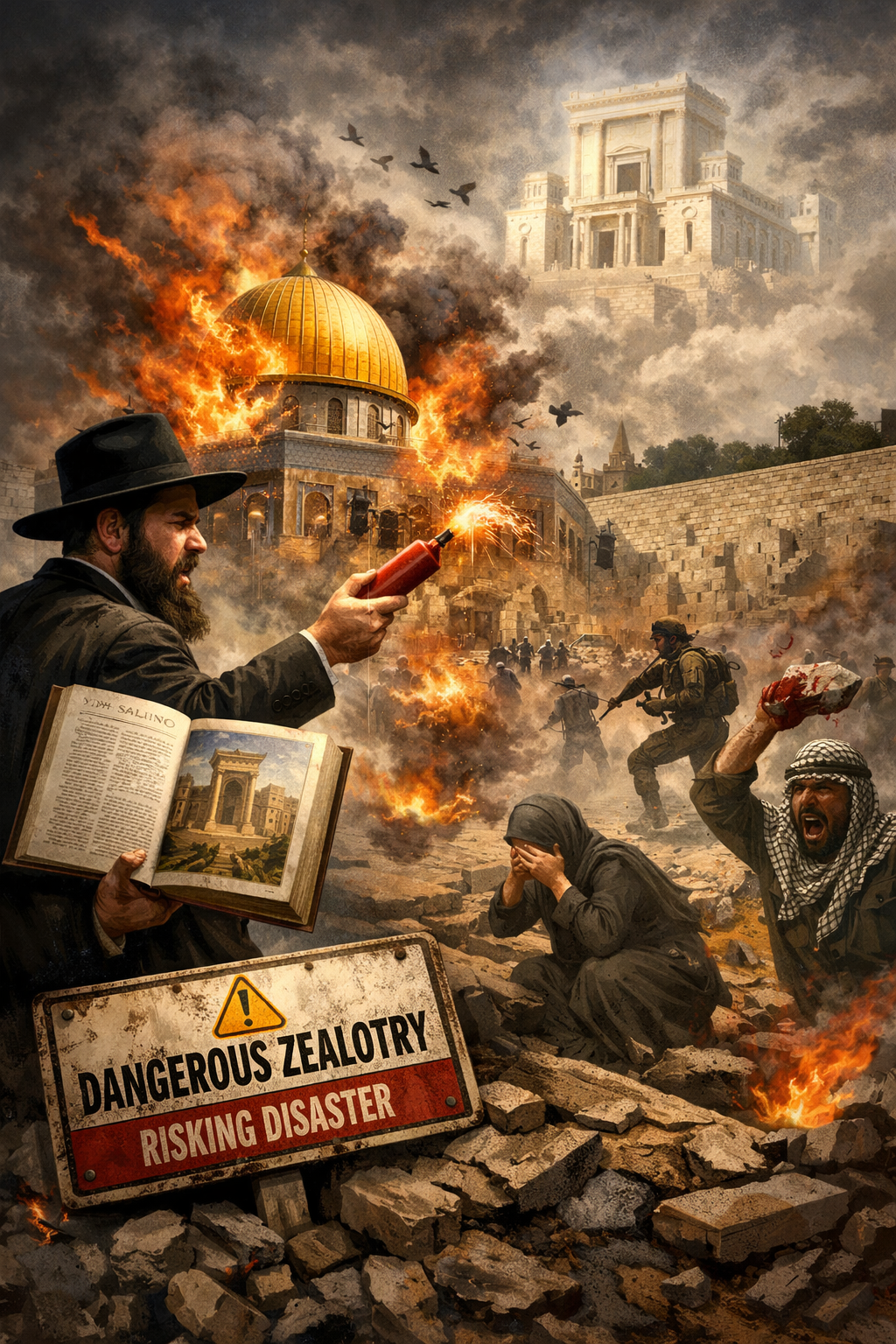
Introduction
Some religious movements today promote the rebuilding of a Third Temple in Jerusalem as a prophetic necessity. According to this view, restoring temple sacrifices and priestly service would fulfill biblical prophecy and usher in the Messianic age.
From a New Testament perspective, however, the idea of rebuilding a temple for sacrifice represents a reversal of the work of Jesus Christ. The New Testament teaches that Christ fulfilled the functions of the temple system—serving as mediator, high priest, sacrifice, and the meeting place between God and humanity.
Understanding this issue requires examining:
- What the temple represented in biblical history
- How the New Testament describes Christ fulfilling those roles
- Why rebuilding a temple would contradict that fulfillment
- How prophetic expectations about rebuilding the temple developed
- Historical parallels with the Jewish zealot movement that led to the destruction of Jerusalem in 70 AD
- The Purpose of the Temple System
The Jerusalem Temple served several key functions in ancient Israel.
A place of sacrifice
Animal sacrifices were offered for sin, thanksgiving, and covenant worship.
A place of mediation
Priests acted as intermediaries between God and the people.
A place of God’s presence
The Temple symbolized God’s dwelling among His people.
A place of national worship
Israel gathered there for major festivals and covenant observances.
The temple therefore represented the meeting place between God and humanity.
- The New Testament Teaching: Christ Fulfilled the Temple System
The New Testament repeatedly teaches that Jesus fulfilled the functions of the temple system.
Christ is the mediator
“There is one mediator between God and men, the man Christ Jesus.”
(1 Timothy 2:5)
Christ is the high priest
The book of Hebrews describes Jesus as the ultimate High Priest, superior to the Levitical priesthood.
Christ is the sacrifice
“Christ was offered once to bear the sins of many.”
(Hebrews 9:28)
Unlike temple sacrifices that were repeated continually, Christ’s sacrifice was once for all.
Christ is the true temple
Jesus said:
“Destroy this temple, and in three days I will raise it up.”
(John 2:19)
The text explains that he was speaking about his body.
This means that God’s presence was no longer centered in a building but in Christ himself.
- Why a “Third Temple” Contradicts This Teaching
If temple sacrifices and priesthood were restored, it would imply several things:
- Christ’s sacrifice was insufficient
- A human priesthood is still necessary
- Mediation between God and humanity still requires ritual sacrifice
- God’s presence must again be localized in a physical temple
Each of these ideas directly conflicts with the New Testament teaching that Christ completed the temple system.
In that sense, the concept of a future sacrificial temple represents a theological rejection of Christ’s completed work.
- The Basis for Third Temple Expectations
Despite the New Testament teaching, some groups expect a future temple based on passages in the Hebrew scriptures.
Ezekiel’s temple vision
Ezekiel chapters 40–48 describe a large temple complex with sacrifices and priestly service. Because this temple was never historically built, to these specifications, some interpreters conclude it must refer to a future temple.
It is noteworthy to take into consideration what Yahweh stated to Ezekiel in chapter 43:10-11. It was left up to the builders to follow the dimensions and regulations that Yahweh had stated. History shows that they didn’t.
Ezekiel 43:10-11 (NIV):
10 “Son of man, describe the temple to the people of Israel, that they may be ashamed of their sins. Let them consider its perfection, 11 and if they are ashamed of all they have done, make known to them the design of the temple—its arrangement, its exits and entrances—its whole design and all its regulations and laws. Write these down before them so that they may be faithful to its design and follow all its regulations.
Messianic expectations
Traditional Jewish teaching holds that the Messiah will:
- restore Israel
- rebuild the temple
- reinstate temple worship
Torah commandments
Many commandments in the Law of Moses relate to temple service. Some religious Jews believe those commandments cannot be fully practiced until the temple is rebuilt.
- The Danger of Political Messianic Expectations
History shows that intense expectations about political and prophetic fulfillment can lead to disastrous outcomes.
In the first century, many Jews believed the restoration of Israel and the temple would occur through national revolt against Rome.
This belief helped fuel the uprising known as the Jewish revolt of 66 AD.
First Jewish–Roman War
The movement was strongly supported by revolutionary groups called the Zealots, who believed their revolt would bring about divine intervention.
- Jesus Warned of the Coming Destruction
Jesus warned that Jerusalem and the temple would be destroyed.
“Not one stone shall be left upon another.”
(Matthew 24:2)
He warned his followers that when they saw Jerusalem surrounded by armies, they should flee immediately.
“Let those who are in Judea flee to the mountains.”
(Luke 21:21)
- Two Different Responses
When the Roman army came, two groups responded differently.
Those who followed Jesus’ warning
Early Christians reportedly fled to the city of Pella in the mountains east of the Jordan.
Those who stayed
Many others remained in Jerusalem, expecting divine intervention.
The result was catastrophic.
Siege of Jerusalem
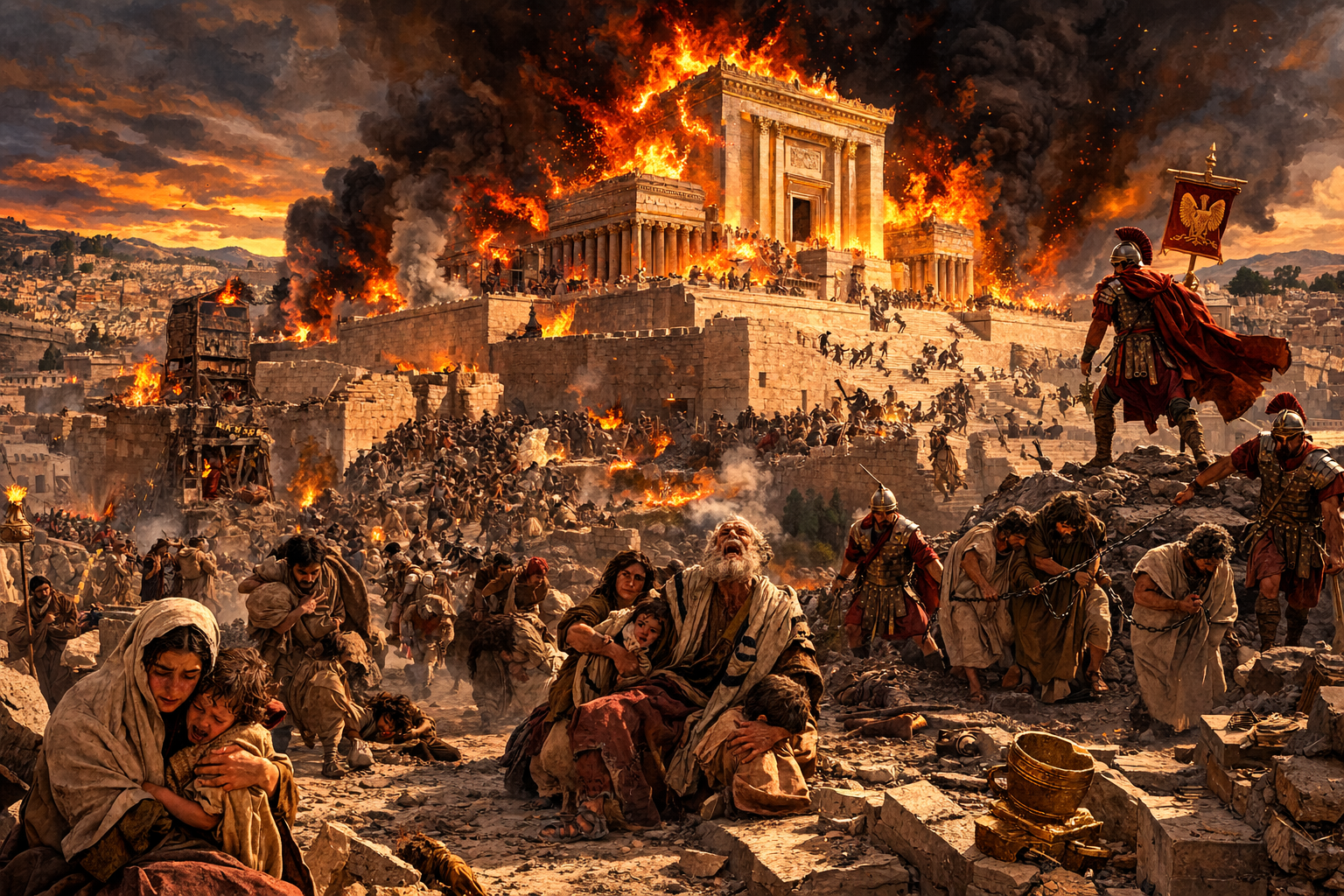
Roman forces under Titus destroyed the city and the temple. Large numbers of people died during the siege.
- The Historical Lesson
The tragedy of 70 AD illustrates the danger of misguided prophetic expectations combined with political zeal.
Many believed they were participating in the fulfillment of divine prophecy through armed struggle and national restoration.
Instead, the result was the destruction of the city and temple they hoped to defend.
Conclusion
The New Testament presents Jesus Christ as the fulfillment of the temple system.
He serves as:
- the mediator
- the high priest
- the sacrifice
- the true temple
For this reason, the idea of rebuilding a sacrificial temple stands in direct tension with the New Testament teaching that Christ completed the work of the temple.
History also warns that attempts to force prophetic fulfillment through political or religious movements can lead to devastating consequences.
The destruction of Jerusalem in 70 AD stands as a powerful reminder of that reality.
Another viewpoint about “The Third Temple”:
Many people are intrigued by the push by some religious groups to build a third temple and that the building of the temple will bring about the coming of the Messiah. Many Jews are pushing for this, and they do not believe that the messiah has come yet. They ignore passages such as:
Ezekiel 34 where Yahweh calls out the bad shepherds of Israel and states that he is going to care for his sheep by raising up one shepherd, his servant David (Jesus).
Daniel 9 where it is prophesied about the appearance of the Messiah (Jesus), in the first century.
Some believe that a third temple is needed to fulfil Daniel 11-12. There are two instances where the king of the north strikes against the old city of Jerusalem. The king of the north, in the first instance, is Rome (the abomination). Rome is granted to destroy Jerusalem, which they did in 70 AD. There is no occupation or “set up” of the abomination back then but there is, in the future instance. The term “continual sacrifice” is used in the second instance. Some could conclude that this means that a third temple needs to be set up. However, that is not necessary. The term “continual sacrifice” is used as an identifier of location. During the time of Daniel’s writing, there was no literal continual sacrifice going on in the old city. Jesus mentioned that the temple would be torn down. If that tearing down is complete or not, time will tell. There are still foundation stones (a.k.a. the wailing wall) that remain and the possibility of hidden old temple treasures hidden in the area, as mentioned in the copper scroll found among the Dead Sea scrolls.
What are some of the core reasons for this desire of the Jews that are pushing for this?
They desire to become the ruling nation over all other nations, with Yahweh’s backing. They twist prophecies of the Tanakh and put faith in the Talmud to entertain their desires. They feel that they are on the edge of fulfilling prophecy and desire to help usher their beliefs in. (The Tanakh is known as the “Hebrew” scriptures by Christians. The Talmud is basically the “Oral Law” with human (Rabbi’s) interpretations put in writing from about 200-500AD, many years after Jesus’ death. Keep in mind that the Talmud describes Jesus in hell boiling in excrement. Those who believe in the Talmud as sacred do not believe in Jesus’ teachings and view him as corrupt. However, the Karaite Jews, and some others, reject the Talmud as sacred) Many are taught that they are to hate and conquer their enemies and view them as inferior. This is in direct contrast to what Jesus taught. Jesus taught that one should love their enemies and look forward to their inheritance – A thought interwoven throughout Ezekiel.